Yes. For a U.S. flight, a normal 20,000mAh lithium-ion power bank is usually allowed when its actual rating is 100 watt-hours (Wh) or less. A 20,000mAh unit rated at 3.6V or 3.7V works out to about 72Wh or 74Wh. Put it in your carry-on, never your checked suitcase, and confirm both the printed Wh rating and the operating airline’s current policy before you pack. The FAA classifies power banks as spare lithium batteries, not ordinary accessories (FAA PackSafe).
Key Takeaways
- A power bank belongs in carry-on baggage only. If your carry-on is gate-checked, remove the power bank and keep it in the cabin with you (FAA PackSafe).
- Convert capacity with
Wh = (mAh / 1,000) × voltage. At 3.6V or 3.7V, 20,000mAh is about 72Wh or 74Wh.- Up to 100Wh is the standard FAA limit for a spare rechargeable lithium battery. From 101Wh through 160Wh, airline approval is required and no more than two larger spare batteries are allowed per person (FAA PackSafe).
- Protect the power bank from damage and short circuits. Do not travel with one that is swollen, damaged, or subject to a safety recall unless it has been made safe as the FAA guidance requires.
Check the watt-hour rating, not just the mAh number
Milliamp-hours and watt-hours are related, but they are not interchangeable. mAh describes electric charge, while the FAA’s rechargeable-battery threshold is stated in Wh. The FAA’s calculation is voltage multiplied by amp-hours, so first divide mAh by 1,000 to convert it to amp-hours (FAA PackSafe).
| Capacity and voltage on the specification | Calculation | Approximate energy | Travel implication |
|---|---|---|---|
| 20,000mAh at 3.6V | 20Ah × 3.6V | 72Wh | Below the 100Wh threshold |
| 20,000mAh at 3.7V | 20Ah × 3.7V | 74Wh | Below the 100Wh threshold |
Use the Wh figure printed on the power bank when it is available. If you need to calculate it, use the voltage that the manufacturer pairs with the battery capacity. A package may list more than one voltage for different functions, so do not choose a favorable-looking number from an unrelated specification. If the label is missing, unreadable, or unclear, contact the manufacturer or airline instead of guessing.
The table explains why many ordinary 20,000mAh banks fit under the standard threshold. It does not mean every product advertised as 20,000mAh has the same rating. The product label is what you should use at the airport.
What the 100Wh and 160Wh rules mean
The 100Wh threshold is the straightforward case. The FAA permits most personal-use spare rechargeable lithium batteries at or below 100Wh in carry-on baggage, and that category includes power banks. The FAA does not set a general quantity limit for most of these smaller personal-use batteries, but it specifically warns that airlines may impose stricter limits on watt-hours and the number of power banks a passenger may carry (FAA PackSafe).
A power bank rated from 101Wh through 160Wh is different. You need approval from the airline, it must still travel in the cabin, and the FAA permits no more than two such larger spare lithium-ion batteries per person. Do not treat an approval for a larger battery as automatic because you passed security on an earlier trip. Check with the airline before travel and keep its confirmation if it provides one.
For an international itinerary, look beyond a U.S. departure-airport rule. IATA says that lithium-battery carriage depends on the battery configuration and Wh rating and that spare batteries are not allowed in checked baggage (IATA Batteries guidance). Your airline, connecting carrier, or destination may apply a more restrictive policy.
Pack the power bank safely in the cabin
A power bank may look like a charger, but it contains its own lithium-ion battery. That makes it a spare, uninstalled battery for travel purposes. The FAA expressly includes power banks and portable rechargers in its carry-on-only rule (FAA PackSafe).
Use this packing approach:
- Put the bank in a carry-on bag or personal item that stays in the cabin.
- If an agent gate-checks your carry-on, remove the power bank before handing over the bag and keep it with you.
- Use a fitted pouch, retail packaging, or another protective case so the bank is not crushed or exposed to loose metal objects. FAA examples for protecting battery terminals include retail packaging, tape, a battery case, a protective sleeve, or a snug plastic bag.
- Leave behind a bank that is swollen, leaking, cracked, overheats, or has a safety recall that has not been resolved. The FAA says damaged or recalled batteries likely to create sparks or dangerous heat must not be carried unless they have been removed or made safe.
A pouch is a sensible travel accessory, but it does not turn an over-limit or damaged battery into an allowed one. Capacity, condition, and the airline’s policy still control.
What to expect at the TSA checkpoint and gate
TSA screening and airline battery rules are related but separate checks. TSA’s permitted-items list says that even an item that is generally allowed can receive additional screening or be refused at the checkpoint if it triggers an alarm, appears tampered with, or raises another security concern. The final checkpoint decision rests with TSA (TSA’s Complete List).
Keep the power bank easy to retrieve and make sure its capacity label is legible. Be ready to follow an officer’s request to take it out for inspection, but do not assume that every airport will require a separate bin. Passing the checkpoint also does not replace an airline’s capacity, quantity, or cabin-use rules.
At the gate, the important moment is a forced bag check. FAA guidance is explicit: remove spare lithium batteries and power banks from a carry-on that will travel in the hold, then keep them with you in the aircraft cabin (FAA PackSafe).
Can you use or recharge the power bank during the flight?
Carrying a power bank onboard and using it onboard are separate questions. Check the operating airline’s current policy on power-bank use and recharging before departure, then follow crew instructions in the cabin. If that airline allows carriage but restricts charging or use, the baggage allowance does not override the restriction.
The FAA also instructs passengers to notify the flight crew immediately if a lithium battery or battery-powered device overheats, expands, smokes, or burns (FAA PackSafe). Stop using the bank if you notice any of those signs. Do not try to troubleshoot a hot or swelling battery in flight.
You may not need a new power bank
You do not need to replace a normal 20,000mAh power bank just because you are flying. Keep the one you own if all of these are true:
- Its printed rating is 100Wh or less, or its clear manufacturer specification calculates to that level.
- Its housing, ports, and cables are in good condition, with no swelling, cracks, leaks, or overheating.
- You can pack it in the cabin and protect it from damage and short circuits.
- Your airline permits the number of power banks you plan to bring and does not have a separate restriction that affects your itinerary.
A different plan is needed if the capacity label is absent, the Wh result is above 100Wh, the airline requires approval, or the unit is damaged. Do not buy a smaller bank based on mAh alone. A clearly labeled, healthy 20,000mAh bank can already be the right travel option.
Pre-flight power-bank checklist
Before leaving for the airport, check the label for Wh, place the bank in your carry-on, protect it with a pouch or case, and review the operating airline’s current battery policy. If you are bringing a bank above 100Wh, get airline approval before you travel. At the gate, remove it if your bag is checked. In the cabin, follow crew instructions and report any sign of overheating or damage immediately.
Frequently asked questions
Can I put a 20,000mAh power bank in checked luggage?
No. A power bank is a spare lithium-ion battery, so the FAA requires it in carry-on baggage only. If your carry-on is taken at the gate, remove the bank and keep it in the cabin (FAA PackSafe).
Do I need airline approval for a 20,000mAh power bank?
Usually not if its actual Wh rating is 100Wh or less. A 20,000mAh unit at 3.6V or 3.7V is about 72Wh or 74Wh. Approval is required for a larger spare lithium-ion battery from 101Wh through 160Wh, subject to the two-battery maximum. Always verify the label and airline policy rather than relying on the mAh number alone (FAA PackSafe).
How many power banks can I bring?
For most personal-use spare batteries at or below 100Wh, the FAA does not set a general quantity limit. However, airlines can set stricter limits on how many portable chargers a traveler may carry. Check the airline that operates each flight, especially for international or connecting trips (FAA PackSafe).
Will TSA let a power bank through security?
A normally permitted power bank can still receive additional screening, and TSA makes the final decision at the security checkpoint. Keep the item accessible, make its capacity marking easy to read, and comply with screening instructions (TSA’s Complete List).
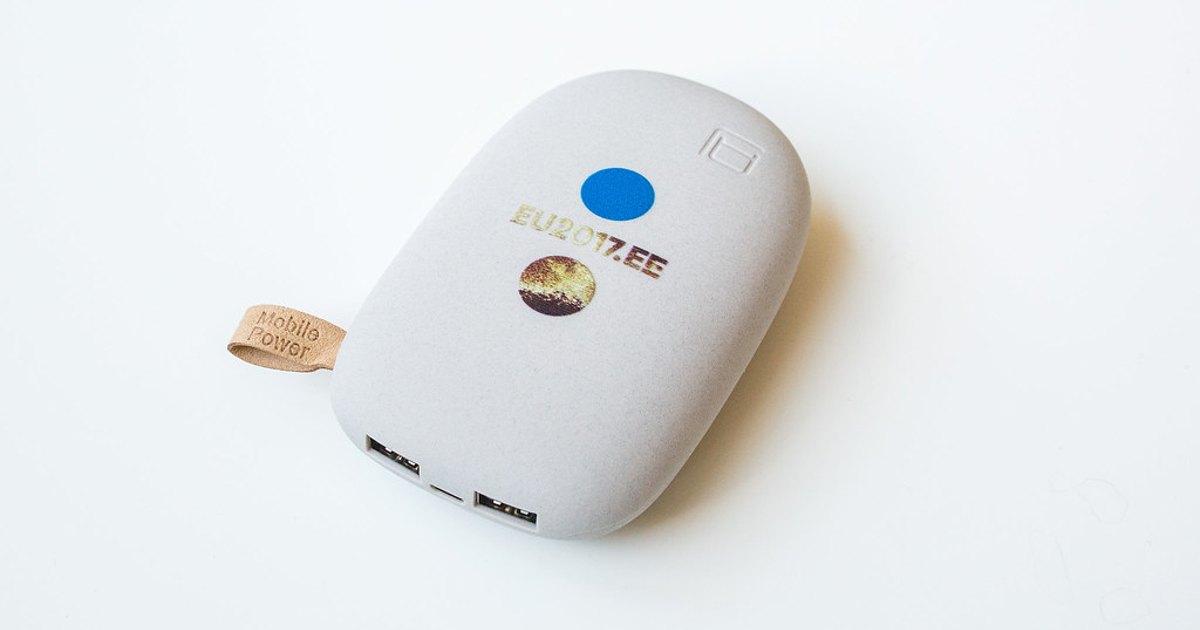
Image credit: EU2017EE via Flickr, licensed under CC BY 2.0. Resized and cropped. Illustrative photo only; no product testing is implied.